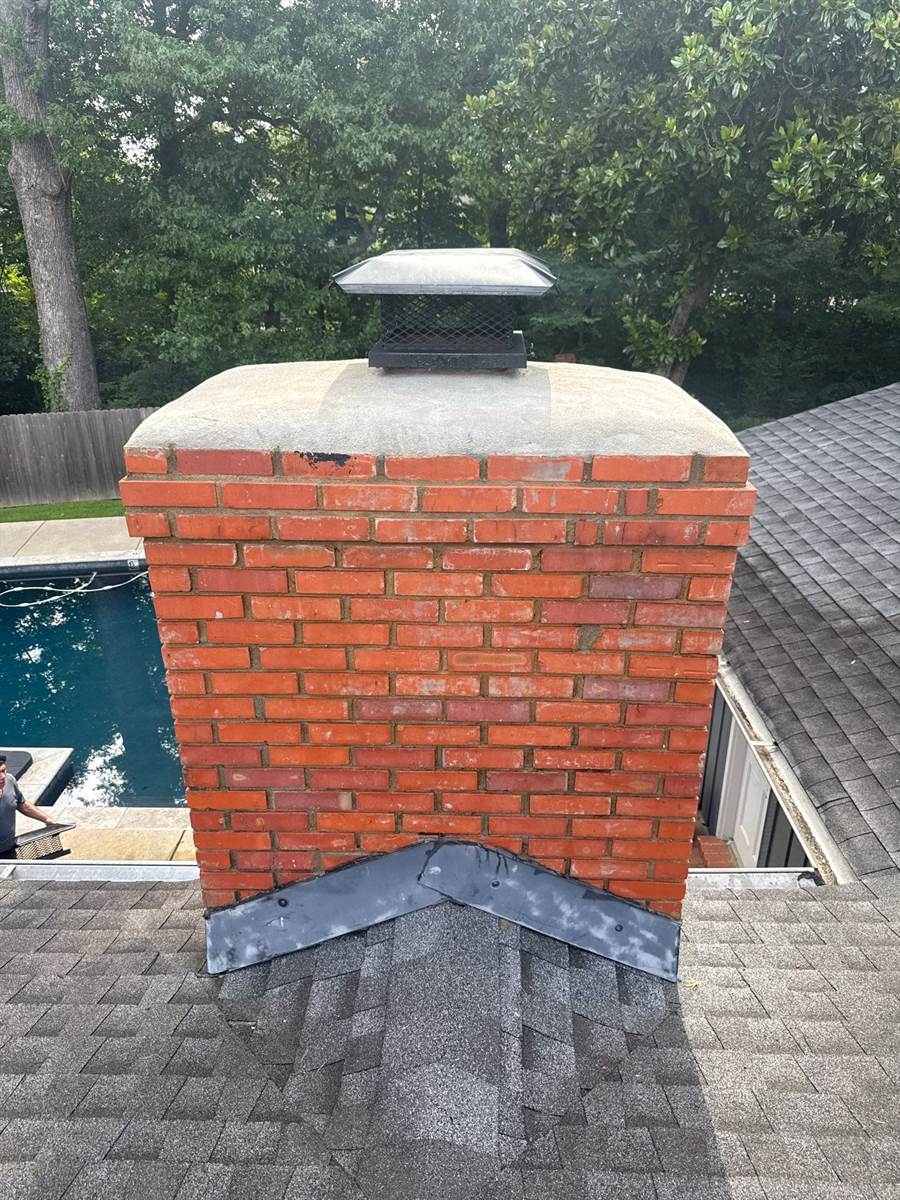
Memphis Chimney Repair, Inspection & Safety
Your chimney is a safety system, not just a feature. We repair, rebuild, sweep and inspect masonry chimneys to national fire-safety standards — and explain exactly what the codes require, in plain English. Tap a topic below to jump to the detail section.
Complete Chimney & Fireplace Services
A masonry chimney is exposed to fire and combustion gases on the inside and to rain, freeze-thaw and sun on the outside. That's a punishing job, and small problems turn into expensive (and dangerous) ones fast. Madewell handles the full range of chimney and fireplace work — from a quick sweep to a full rebuild — and we do it to recognized safety standards.
Below you'll find what each service involves, how chimney inspections and codes actually work, and the warning signs that mean it's time to call.

Chimney & Fireplace Services We Provide
Tap any service for more detail.
Chimney Repair & Rebuilding
Spalling brick, cracked stacks and storm or lightning damage repaired or fully rebuilt, matched to your original brick.
Chimney Inspections
Written NFPA Level 1, 2 and 3 reports. We sweep first ($200) so we can see the flue. Not the free drone look on a repair estimate.
Chimney Sweeping
Creosote and blockage removal — $200. Required before we can issue an inspection report.
Crowns & Caps
Cracked crowns rebuilt as poured concrete and rusted caps replaced with stainless caps and spark arrestors.
Flue Relining
Cracked or unlined flues relined with stainless so heat and creosote stay in the flue — chimney fire prevention, not a guess from the hearth.
Firebox Rebuilding
Cracked or burned-out fireboxes rebuilt with proper firebrick and refractory mortar.
Smoke Chamber Parging
Smoke chambers smoothed and sealed (parged) to improve draft and reduce creosote buildup.
Damper Repair
Rusted, stuck or missing dampers replaced with a top-sealing damper you open from a handle in the firebox.
Chase & Flashing Repair
Wooden chase repair, chase covers, and step/counter-flashing to stop leaks where the chimney meets the roof.
Chimney Repair & Rebuilding
Your chimney takes more weather abuse than almost any part of the house. When brick starts spalling, the crown cracks, or the stack leans, water and time only make it worse. We repair and fully rebuild masonry chimneys — matching original brick and mortar so the finished work looks like it was always there.
- Partial and full rebuilds (above and below the roofline)
- Tuckpointing and brick replacement for spalled or missing units
- Storm, wind and lightning-strike damage
- Leaning or settling chimney stabilization
- Coordination with crowns, caps, liners and flashing (sections below)
Related: spalling · tuckpointing guide · leak repair · project gallery


Chimney Inspections & the Codes That Govern Them
Chimney safety in the United States is guided by national standards and building codes. Here's what they actually say — and when an inspection is recommended or required.
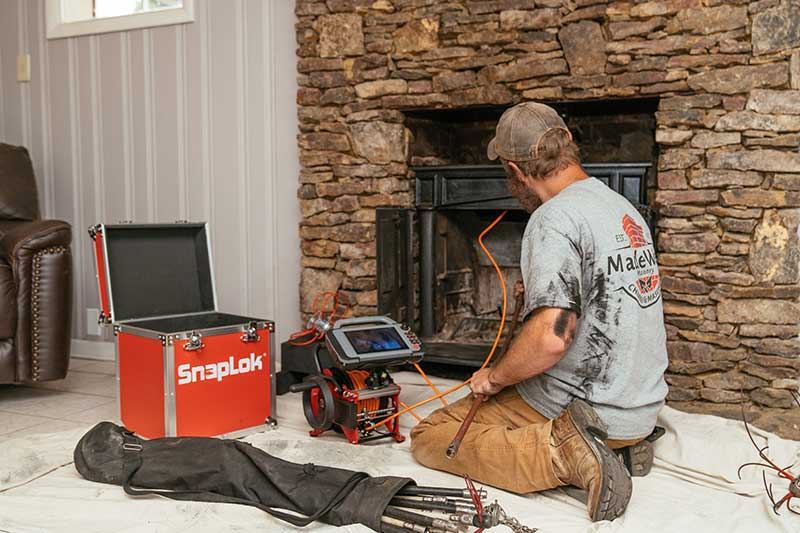
Two different services — do not mix them up
A chimney inspection is a written legal report on the flue and fireplace — the document used for sales, insurance, and code work. We sweep first so we can see inside; sweeping is $200. A free repair estimate is the other visit: we fly a 4K drone around the outside (crown, cap, flashing and upper brick). The drone photos are free with that estimate. They are not the inspection report.
Free with a repair estimate: 4K drone photos of the outside
Before we recommend masonry repair, we fly a high-resolution camera drone around the exterior of your chimney and roofline. It captures close-up photos of the crown, cap, flashing and upper brickwork — the parts that fail first and are hardest to see safely from the ground — with no ladders against your gutters and no foot traffic on your shingles. You review the photos with us. That exterior check is included with a repair estimate. It does not clean the flue and it does not replace a written inspection. Request a free repair estimate.
The annual inspection standard (NFPA 211)
The National Fire Protection Association's standard NFPA 211 — "Standard for Chimneys, Fireplaces, Vents, and Solid Fuel-Burning Appliances" — calls for chimneys, fireplaces and vents to be inspected at least once a year, and cleaned and repaired as needed. The Chimney Safety Institute of America (CSIA) makes the same recommendation. While no single federal law forces a homeowner to sweep their own chimney, NFPA 211 is the nationally recognized safety standard, and it is widely referenced by building officials, fire departments, insurers and home inspectors.
The three inspection levels
NFPA 211 defines three levels of chimney inspection. Knowing which one you need can save you money and keep you compliant:
Level 1 — Standard annual inspection
For a chimney in continued service under the same conditions, with no changes. We check the readily accessible portions of the chimney, the flue and the connections for soundness, creosote buildup and obstructions. Recommended every year.
Level 2 — Required on changes, sales & events
A Level 2 inspection is called for whenever there's a change to the system (a new appliance, a different fuel, a relining), before a property is sold or transferred, or after an event that could have damaged the chimney — a chimney fire, a severe storm, an earthquake or a lightning strike. It includes everything in a Level 1 plus accessible attics, crawl spaces and basements, and a video scan of the flue interior.
Level 3 — When a hidden hazard is suspected
When a Level 1 or 2 inspection turns up a serious concern that can't be evaluated otherwise, a Level 3 inspection examines concealed areas and may require removing parts of the chimney or building (such as a chase cover or a wall section) to investigate.
When is a chimney inspection legally or contractually required?
- Buying or selling a home. A Level 2 inspection is the recognized standard before a property changes hands. Many real-estate contracts and home inspectors specifically call for it.
- After a chimney fire or major weather event. NFPA 211 calls for a Level 2 inspection because hidden cracks may have formed in the liner.
- Insurance claims and requirements. Homeowner's insurers frequently require proof of inspection and maintenance, and may deny a fire claim without it.
- Installing or changing an appliance. Adding a wood stove or insert, or switching fuels, triggers a Level 2 inspection to confirm the flue is correctly sized and lined.
Building-code essentials for masonry chimneys
New construction and rebuilds in our area follow the International Residential Code (IRC) as adopted locally, which sets out requirements such as:
- The 3-2-10 rule for height: a chimney must terminate at least 3 feet above the point where it passes through the roof, and at least 2 feet higher than any part of the building within 10 feet. This protects draft and reduces fire risk.
- A proper flue liner sized to the appliance or fireplace opening.
- A code-compliant crown that overhangs the brick to shed water away from the masonry.
- Clearance to combustibles (framing and trim kept the required distance from the masonry).
- A spark arrestor / cap where required to keep embers in and animals out.
We handle local code compliance for you. Codes are adopted and enforced at the city and county level, and rebuilds may require a permit in Memphis and Shelby County. When your project involves code work or a permit, we'll tell you up front and make sure the finished chimney meets the requirements.
Creosote, Soot & Why Sweeping Matters
Every time you burn wood, the smoke deposits creosote on the inside of your flue. Creosote is highly flammable, and it's the leading cause of chimney fires. It builds in three stages — from a flaky soot (Stage 1) to a hard, tar-like glaze (Stage 3) that's difficult to remove. A professional sweep removes this buildup before it can ignite. Sweeping is $200. If you also need the written inspection report, we sweep first so the inspection can actually see the liner.
- Stage 1: light, sooty, brush-removable. Easiest and cheapest to clean.
- Stage 2: shiny, hardened flakes that need more aggressive removal.
- Stage 3: a thick, glazed, tar-like coating — dangerous and hard to remove without special methods.
Sweeping also clears blockages — bird and animal nests, leaves and debris — that block draft and can push carbon monoxide back into your home. A blocked or dirty flue is both a fire hazard and a carbon-monoxide hazard, which is why annual service matters even if you only burn occasionally.
Carbon monoxide is invisible
A cracked liner or blocked flue can let odorless, deadly carbon monoxide into your living space. Pair annual chimney service with working CO and smoke detectors on every level of your home.
Firebox, Smoke Chamber & Damper Work
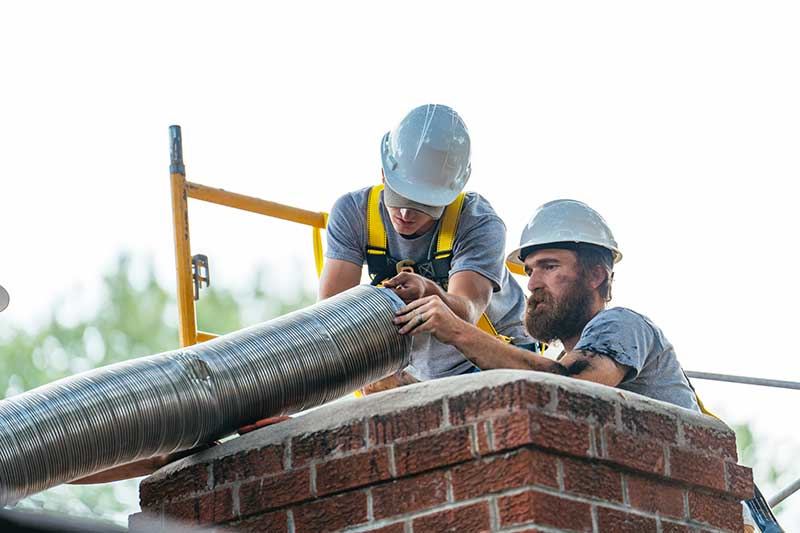
The parts of your fireplace you can't easily see do the hardest work. A hole in the clay liner or a rough smoke chamber is how a chimney fire leaves the flue. We restore the firebox, liner, chamber and damper so heat stays on the intended path.
- Firebox rebuilding with proper firebrick and high-temperature refractory mortar — see the rebuilds
- Smoke chamber parging to smooth and seal the area above the damper for better draft
- Flue relining for cracked, unlined or improperly sized flues — see chimney relining
- Damper repair & replacement, including top-sealing dampers that stop energy loss
- Wooden chase repair and chase covers for prefab chimneys
Chimney Crowns & Caps
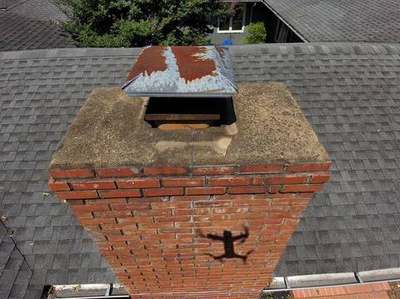
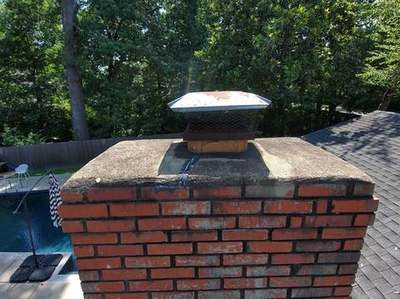
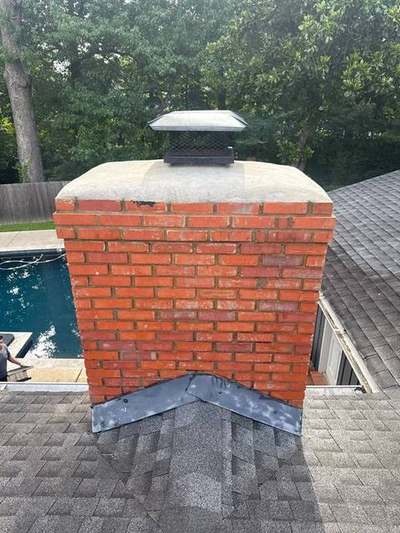
The crown is the sloped slab at the very top of the chimney; the cap is the metal cover over the flue opening. Together they're what keep rain out of the masonry — and they're the single most common place a chimney starts to leak.
These photos show the problem and the fix: a cracked, dirt-filled crown under a rusted cap (including a drone close-up of the open crack), and the same stack after a poured crown, black stainless cap, and fresh flashing. When a crown fails, water runs straight into the brick and flue below.
- Cracked and crumbling crowns rebuilt as properly sloped, poured concrete crowns
- Rusted or undersized caps replaced with stainless steel caps and spark arrestors
- Crown sealing and waterproof coatings to extend the life of the repair
Warning Signs Your Chimney Needs Attention
If you notice any of these, call us before the next time you light a fire — for a sweep and inspection, or a free repair estimate with drone photos of the exterior.
White staining (efflorescence)
A chalky white residue on the brick is a sign of excess moisture moving through the masonry.
Spalling or flaking brick
When brick faces pop or flake off, water has gotten in and freeze-thaw is breaking the masonry apart.
Crumbling mortar joints
Mortar you can scrape out by hand means the joints have failed and water is getting behind the brick.
A cracked or missing crown
The crown is your chimney's roof. Cracks let water pour straight into the masonry below.
Rust, water or odor in the firebox
Rust on the damper, moisture inside, or a musty/smoky smell point to a leak or draft problem.
A leaning or tilting stack
Any lean is a structural red flag — have it evaluated promptly before it becomes dangerous.
Related Masonry Guides
Chimney work often pairs with these services. See our full services list.
Ready to Protect Your Home? Let's Talk.
From a crumbling chimney to a hairline mortar crack, Madewell Masonry gives you an honest assessment and a fair price — backed by 40+ years of experience and a 10-year guarantee on our workmanship.