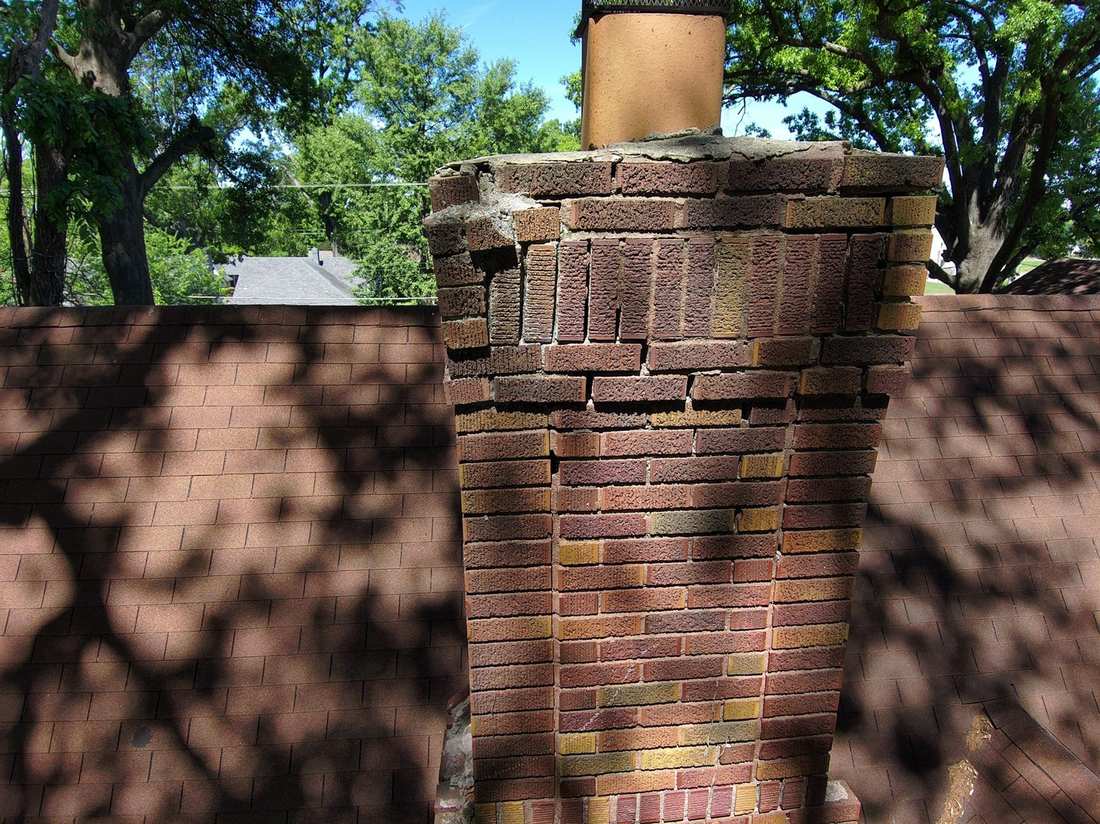
Tuckpointing
The repair of deteriorated mortar joints between brick or stone. A mason grinds out the old, failed mortar and packs in fresh, color-matched mortar so the wall sheds water and regains strength. Because mortar is the weakest part of any brick structure, tuckpointing is one of the most common — and most cost-effective — masonry repairs. It is also called repointing.
See our tuckpointing service →
Spalling
When the face of a brick flakes, chips or pops off, usually because water soaked into the brick and then froze, expanded and broke it apart. Spalling brick looks pitted or crumbling and exposes the soft interior to even faster decay. Left alone, it spreads — which is why sealing and replacing spalled brick early matters.
See brick & stone repair →
Chimney Crown
The solid concrete or mortar slab at the very top of a masonry chimney that seals the top course of brick around the flue. A cracked crown lets water pour straight into the chimney structure, so a rebuilt, properly sloped and sealed crown is one of the best defenses against chimney leaks. Don't confuse it with the cap.
See crowns & rebuilds →
Chimney Cap
The metal cover — usually stainless steel — that sits over the flue opening at the top of the chimney. A good cap keeps rain, animals and debris out of the flue and adds a spark arrestor screen. Think of the cap as the chimney's hat and the crown as its shoulders. A top-sealing damper often lives in that same cap.
See crowns & caps → · See top-sealing dampers →
Flashing
The thin metal sheeting that seals the joint where the chimney passes through the roof. Flashing is one of the most common places a chimney leaks, because caulk and cheap installs fail over time. Proper step-and-counter flashing is layered into both the roof and the masonry so water is guided away instead of seeping in.
See leak repair →
Lintel
The horizontal support — usually a steel angle iron — that carries the weight of the brick above an opening such as a window, door or garage door. When a steel lintel rusts, it swells and lifts the brick above it, causing cracks and sagging. We repair and secure the masonry above the opening for the long term — which doesn't always mean replacing the lintel itself.
See garage lintel repair →
Wall Tie
A corrugated metal strip that anchors brick veneer to the structural wall or framing behind it, so the two layers move together instead of separating. Wall ties are set into the mortar joints as brick is laid. Code calls for extra ties within about a foot of a window or door jamb; when those edge ties are missing or rusted through, the veneer can peel away from the frame and take the sill brick with it. The same hardware is used when the brick above an opening sags on a failed lintel.
See window-edge wall ties → · See lintel & wall tie repair →
Sill
The masonry ledge at the bottom of a window or other opening. On brick homes it is usually a rowlock course that projects a little from the wall so rain sheds off instead of running under the frame. When the jamb brick walks because wall ties are missing, the corner sill unit often comes out with it — leaving a hole under the window that leaks on every storm.
See leak repair at windows →
Jamb
The vertical sides of a masonry opening — the brick that runs up beside a window or door frame. The jamb is where the veneer meets the frame, and it is where extra wall ties belong. An open joint or a gap you can see in raking light along the jamb is a water path, and often the first sign the brick is pulling away from the house.
See jamb and wall-tie repair →
Wythe
A single vertical layer of masonry, one brick thick. Almost every Mid-South brick house is a single wythe of veneer tied to wood or steel framing — not a solid two-wythe wall. That face depends on wall ties to stay on the house. When the ties fail, the wythe can bow or peel at openings while the framing behind it stays put.
See veneer and wall-tie repair →
Rowlock
A brick laid on its face so the short end shows, like a book on its side. Window sills are almost always a rowlock course: the units project from the wall and slope slightly to shed water. A rowlock sill sits on the jamb brick. If that jamb is not tied, the projecting sill is extra leverage pulling the corner unit out.
See sill and opening repair →
Soldier Course
A row of bricks laid standing upright on their ends, like soldiers at attention. On Memphis homes you'll see a soldier course most often directly above garage doors, windows, and entries — it is the decorative band that dresses the lintel. Because that row carries load across the widest openings in the house, a cracked or stepping soldier course is one of the earliest visible signs that the support behind it is moving.
See garage lintel repair →
Shoring
Temporary support — usually adjustable steel jack posts and timber — installed to carry the weight of a wall while the masonry beneath it is repaired. Before any brick comes out above a garage door or window, the load on the failed lintel is transferred onto shoring so the wall above cannot move or collapse. When the rebuild has cured, the jacks are backed off gradually and the wall settles onto its new support.
See shoring in action →
Chimney Chase (Wooden Chimney)
A wood-framed box, clad in siding, that encloses a metal (prefabricated) flue — common on newer homes instead of a solid brick chimney. People call it a "wooden chimney." The chase is topped by a metal chase cover that rusts and leaks over time, rotting the wood and siding below. We rebuild chases, replace chase covers and re-side them.
See wooden chimney repair →
Flue Liner (Relining)
The inner channel of the chimney that safely carries smoke and gases out of your home. Liners can be clay tile or stainless steel. Cracked or missing liners are a fire and carbon-monoxide hazard, so relining — installing a new stainless liner — restores safe venting.
See chimney relining →
Creosote
The dark, tar-like residue that wood smoke leaves inside a flue. Creosote is highly flammable and is the leading cause of chimney fires, which is why annual sweeping to remove it is a core safety service.
See chimney sweeping →
Efflorescence
The white, powdery or crystalline staining that appears on brick and masonry when water moves through it and leaves mineral salts behind on the surface. Efflorescence itself is cosmetic, but it's a red flag that water is getting into the masonry — the underlying moisture problem is what needs attention.
See waterproofing →
Parging
A smooth coat of mortar applied to a masonry surface — most often the inside of the smoke chamber above a firebox — to seal gaps, smooth the surface and improve draft and fire safety.
See smoke chamber parging →
Firebox
The chamber where the fire actually burns. Firebox brick and mortar take intense heat and eventually crack or crumble; rebuilding the firebox with proper firebrick and refractory mortar keeps the fireplace safe to use.
See firebox rebuilds →
Smoke Chamber
The angled area directly above the firebox that funnels smoke from the wide fireplace opening up into the narrow flue. A rough or gapped smoke chamber hurts draft and collects creosote; parging it smooth improves both safety and performance.
See smoke chamber & firebox work →
Damper
The plate that opens so smoke can leave and closes so room air does not. The old style sits just above the firebox and rarely seals once it rusts. A top-sealing damper sits at the cap instead and is opened from a handle in the firebox, so the flue stays closed at the weather end until you burn.
See top-sealing dampers →
Repointing
Another word for tuckpointing — removing failed mortar from the joints and replacing it with fresh, color-matched mortar. "Pointing" refers to the finished mortar joint itself, so re-pointing means renewing those joints.
See tuckpointing →
Waterproofing
Applying a breathable water repellent to masonry so it sheds rain while still letting trapped vapor escape. This is very different from a film-forming paint or sealer, which traps moisture and actually causes spalling. Correct waterproofing extends the life of chimneys, walls, gables and crowns.
See waterproofing →
Gable
The triangular upper portion of a wall under a dual-pitched (peaked) roof. On brick homes, the gable is one of the most weather-exposed masonry surfaces: wind-driven rain and freeze-thaw open mortar joints and can crack or lean the brick toward the peak. Gable repair usually means tuckpointing, replacing spalled brick, and sealing the sloped edges so water cannot get behind the wall.
See brick gable repair →
Gable End
The full exterior end wall of a building that includes the gable triangle — often brick or stone veneer over wood framing from the foundation (or eave line) up to the roof peak. Homeowners and estimators often say "gable end" when they mean the whole brick face that needs repointing or rebuilding, not just the small triangle at the top.
See gable end repair →
Rake
The sloped edge of a gable where the roof edge meets the wall. On masonry gables, the rake is a common failure line: mortar washes out, brick chips, and missing or failed flashing lets water run behind the veneer. Repairing the rake — mortar, brick, and water management — is a core part of gable restoration.
See how we repair gables →
Glass Block
A hollow, mortar-set masonry unit used for privacy walls, basement and bathroom windows, and interior light partitions. Units come in patterns (waffle, ribbed, frosted) and are laid in a grid like brick. When a block cracks or the joints fail, the repair is masonry: cut the failed unit out, match the pattern, and rebuild the joint. It is not a window-glass replacement.
See glass block repair →
Pool Coping
The masonry rim that caps the top of a swimming pool wall — the finished edge you sit on and walk over. Coping is usually brick, natural stone, or precast units set in mortar. When joints open or units loosen, water gets behind the edge, the bond fails, and the rim becomes a trip hazard. The repair is re-setting, repointing, or rebuilding the failed sections — not coating over them.
See pool coping repair →