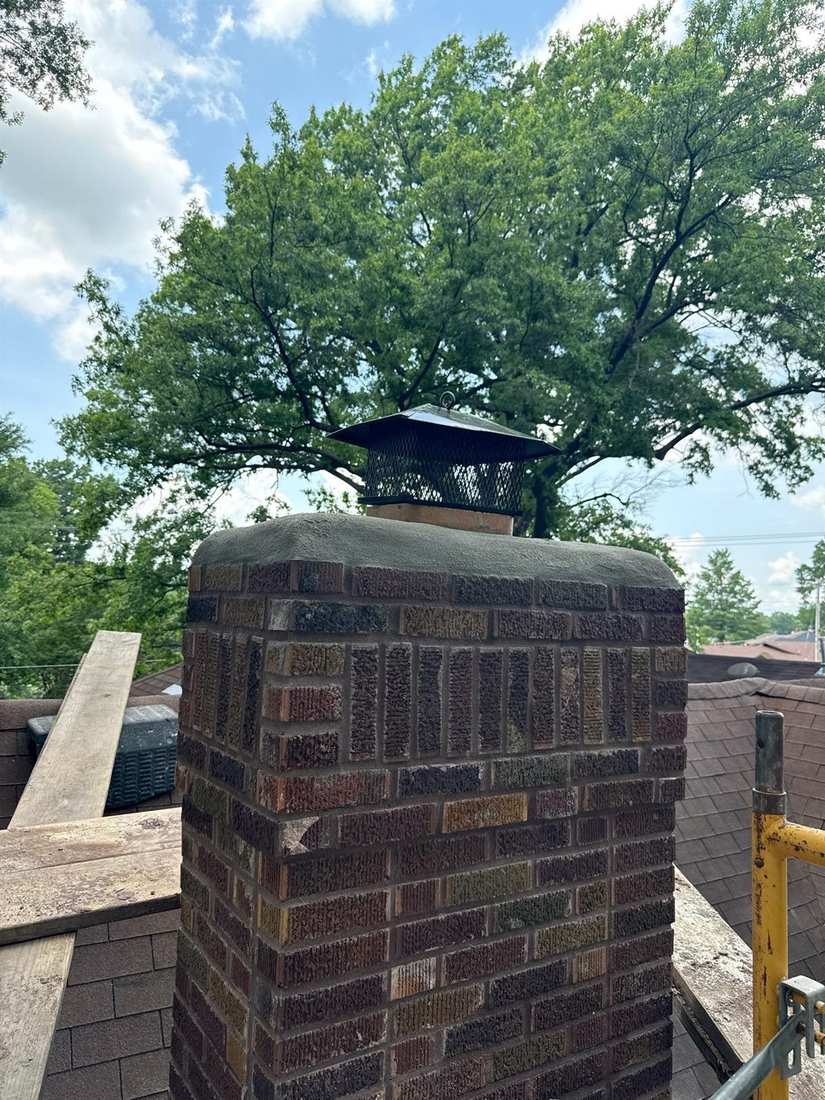
Masonry Leak Repair & Waterproofing in Memphis
Water is masonry's worst enemy. Madewell finds the real source at the brick — open joints around a window, a failed sill, or veneer pulling away from the frame — then rebuilds it and protects the wall with breathable waterproofing.
A Sound Window Can Still Soak the Wall
The pane can be fine. The frame can be fine. Water still gets in. It does not need a crack in the glass. It needs an open joint in the masonry that holds the window.
The sill, the jamb where the frame meets the brick, and the first course under the opening are where mortar washes out first. Once a unit is missing or a joint is open, rain follows the frame into the cavity and shows up later as a stain, soft drywall, or white efflorescence on the face.
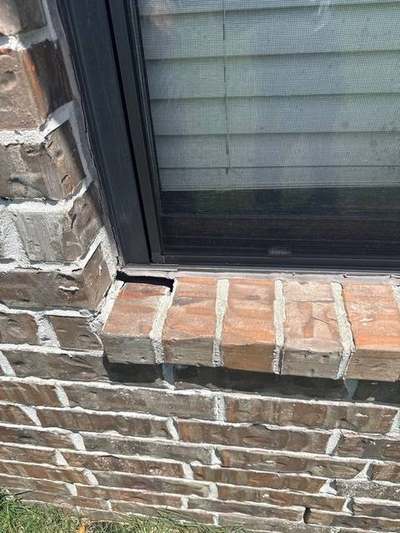
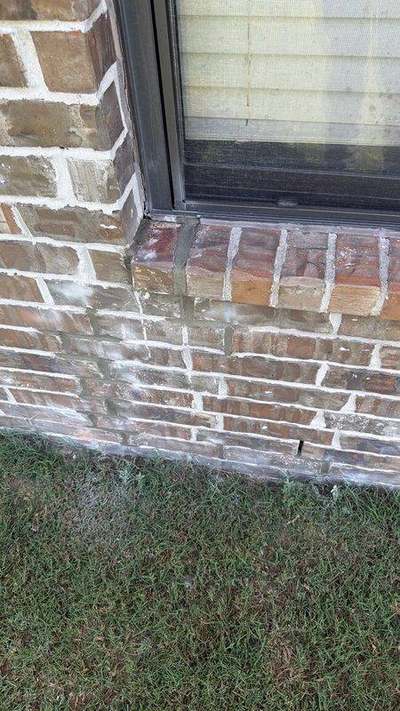
This photo is the typical Memphis version: the corner brick at the sill is gone, the joint at the jamb is open, and there is a clear path under the frame. Caulk on top of that void does not replace the brick. The unit has to go back, the joint has to be packed, and the opening has to shed water again.
Not every opening is the same job
Failed mortar at a brick window is leak repair and tuckpointing. A cracked unit in a mortar-set glass wall is a different guide. Brick sagging above a garage or window usually means the lintel needs support — see lintel repair, not a smear of sealant. Loose or spalled brick away from the opening is brick and stone repair.
Why the Brick Pulls Away — and Takes the Sill With It
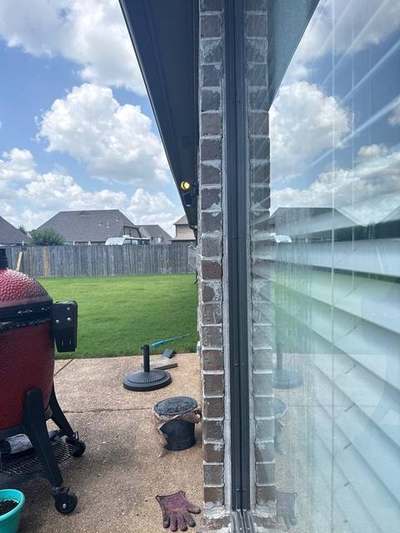
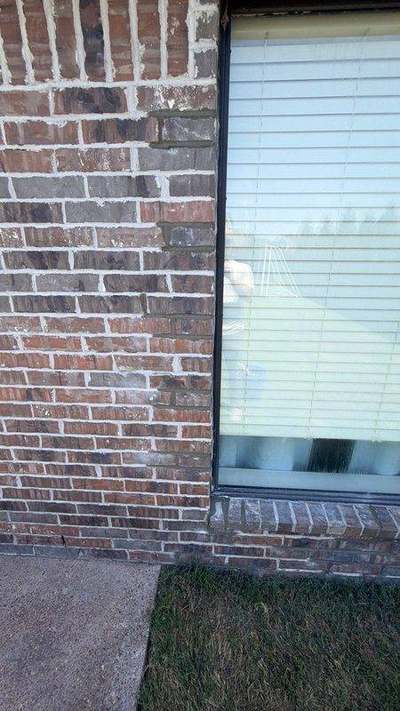
This photo is taken along the window, looking down the jamb. The brick is no longer tight to the frame. In raking light you can see the veneer standing off the opening. That is not a caulk line that failed. The outer brick has started to walk.
A Memphis brick house is almost always one wythe of veneer, not a solid wall. That face is supposed to be pinned to the framing behind it with metal wall ties bedded in the mortar joints as the brick is laid. On a plain run of wall, code (TMS 402 / IRC) wants a tie about every two and a half square feet. At an opening larger than sixteen inches — every window on the house — extra ties are required within about twelve inches of the edge. Those extra ties are the ones that get skipped when a crew is working around a window frame.
Without them, the jamb brick is a free vertical stack. Wind, heat, and the weight of a projecting rowlock sill all try to rotate that stack away from the frame. The sill unit sits on that stack. When the jamb walks, the corner brick at the sill goes with it — which is why the photo above shows a missing sill unit, not a broken window.
Once the gap is open, rain enters the cavity. Wet ties rust and lose section. The peel accelerates. Recaulking the frame does not put the ties back.
Jamb peel is not a lintel sag
Brick dropping or stair-stepping above the opening is usually the lintel — that job lives on the lintel guide. Brick peeling beside the frame, with the sill unit coming loose, is missing or failed ties. We install stainless or helical ties at the opening edge, rebuild the displaced brick and sill, then tuckpoint the joints. Same hardware language as a lintel rebuild; different part of the opening.
How We Close a Leaking Masonry Opening
The work is brick, ties, and mortar first. Waterproofing is the last coat, not the first guess.
1. Open the Failed Course
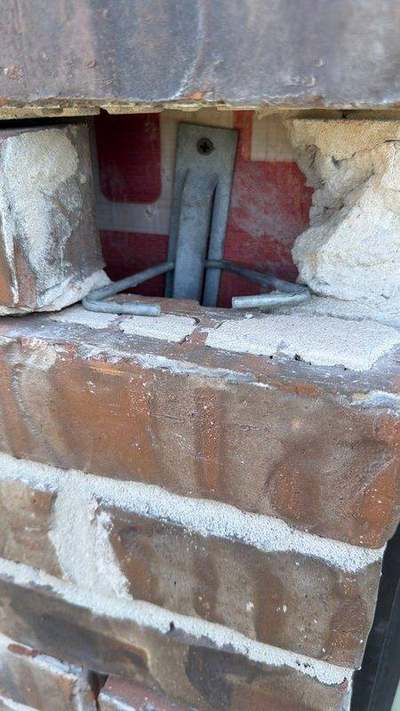
If a brick at the sill or jamb is loose, cracked, or already gone, it comes out. This photo is that step: one course opened at the jamb so we can see the cavity, whether a wall tie was ever there, and how far water has been traveling behind the face. Guessing from the outside is how people recaulk the same corner every spring.
What we are looking for is simple. Is the unit itself failed, or only the joint? Is the frame still sitting on masonry, or is there a void under the sill? Are ties present within a foot of the opening, or was the veneer never pinned there? The answer decides whether we replace a brick, rebuild the sill, add ties, or just pack the joint.
2. Tie It, Rebuild It, Then Waterproof
Missing ties go in first — stainless or helical, in the bed joints along the opening edge, not a smear on the face. Then the missing unit goes back. Fresh mortar is packed at the jamb and under the frame so there is no gap for water to sit in. Joints are struck to match the wall, the same standard as our tuckpointing work. That is the repair that actually stops the leak.
Only after the masonry is closed do we apply a breathable masonry water repellent so liquid water beads off the face while vapor can still leave the wall. Paint, elastomeric coatings, and heavy caulk over open brick are the opposite of that. They trap moisture in the unit. Trapped moisture is what blows the face off the brick in a Mid-South freeze-thaw winter — spalling. Replacing already-spalled units is brick repair; waterproofing will not put the face back on.
Waterproofing is not the patch
If the joint is open, we rebuild the joint. If the brick is gone, we replace the brick. If the veneer has walked, we tie it. Waterproofing then protects the finished masonry. It does not replace it.
Breathable Waterproofing, Not Paint
Brick has to breathe. A film sealer or masonry paint stops liquid water at the surface and also stops vapor from leaving. In Memphis that trapped moisture freezes, expands, and pops the face of the brick — spalling. White salt stains on the wall (efflorescence) are the early warning: water is already moving through the masonry.
We use a breathable masonry water repellent. It lets the wall dry. It does not fill a missing brick, an open joint, or a veneer that has walked off its ties. That is why it comes last, after the opening is rebuilt. The same idea, on a chimney instead of a window, is walked through on the chimney repair guide.
Leak Repair Questions
Use a breathable masonry water repellent, not paint or film sealers. Breathable products stop liquid water while letting vapor escape. Waterproofing comes after the masonry at the opening is rebuilt.
White chalky staining from water moving salts through masonry. It signals a moisture problem that should be fixed at the source.
Yes. Water often enters at the brick sill, the jamb joint, or a missing unit next to the frame — not through the pane. Rebuilding the masonry at the opening stops that path. If the opening is a mortar-set glass wall, that is a different repair; see the dedicated guide.
Usually missing or rusted wall ties along the opening edge. The veneer is a single wythe; without extra ties within about a foot of the jamb it can walk off the frame and take the sill brick with it. Sagging brick above the opening is a different problem — that is a lintel job.
Caulk does not replace a missing brick, a washed-out mortar joint, or a wall tie. We rebuild the masonry first, then use a breathable water repellent. Heavy caulk or paint over open brick traps moisture and can cause spalling.
Ready to Protect Your Home? Let's Talk.
From a crumbling chimney to a hairline mortar crack, Madewell Masonry gives you an honest assessment and a fair price — backed by 40+ years of experience and a 10-year guarantee on our workmanship.